
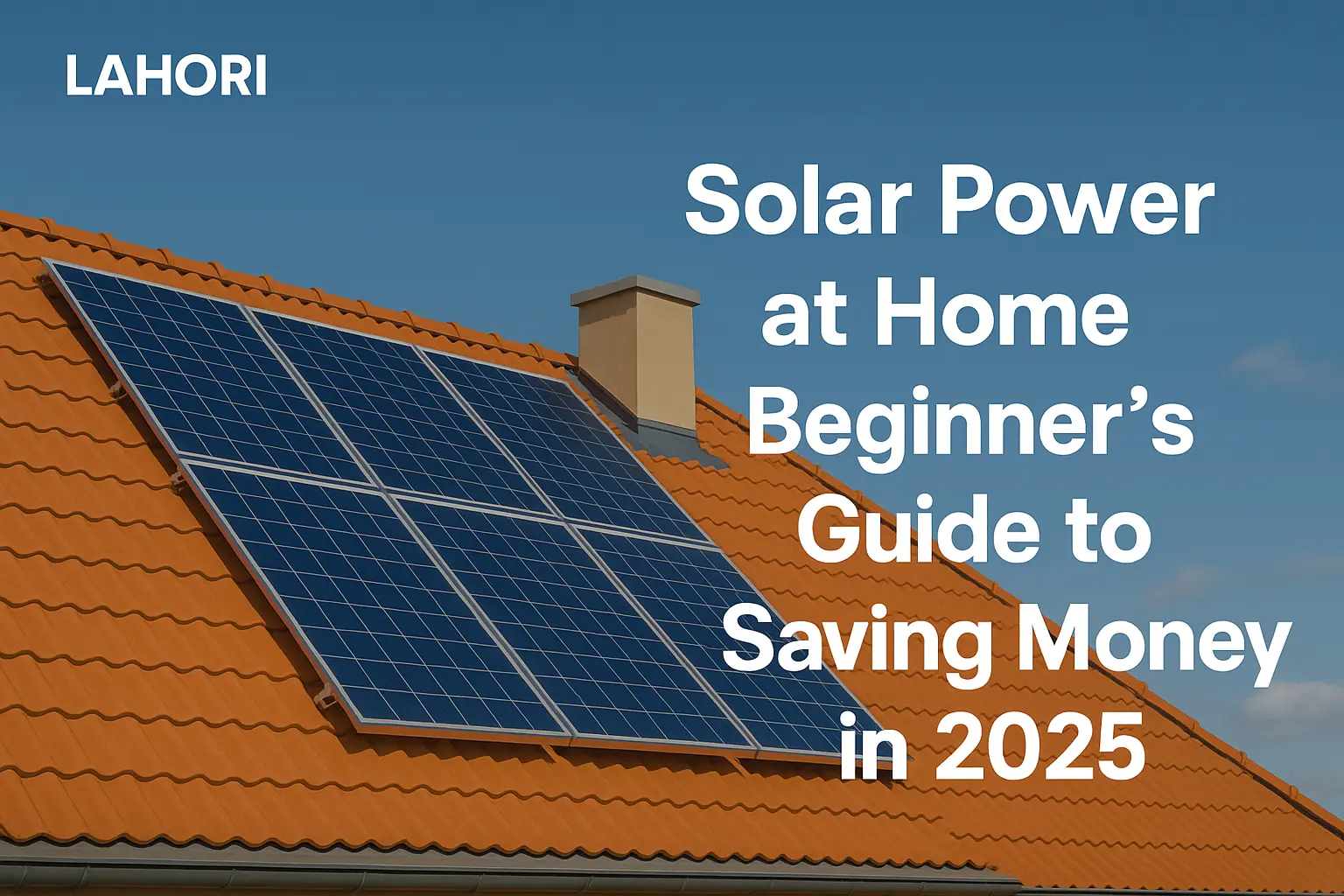
With Pakistan’s electricity costs soaring and load-shedding worsening, solar power has become a lifeline for households. Searches for “home solar panels” surged by *110% in 2024, and 2025 brings even more affordable, efficient solutions. At *Lahori Mandi, we simplify solar energy for beginners—from costs to installation—so you can slash bills and embrace sustainability. Let’s light up your home!
Why Go Solar in 2025?
- Save 50–70% on Bills: Solar systems offset grid electricity, especially during peak tariff hours.
- Load-Shedding Relief: Battery backups keep fans, lights, and WiFi running 24/7.
- Govt Incentives: Net metering policies let you sell excess power to the grid (available in Lahore, Karachi, Islamabad).
- Eco Impact: Reduce reliance on fossil fuels—1 solar system cuts ~4 tons of CO₂ yearly.
How Solar Power Works: Basics for Beginners
A home solar system has 3 core components:
- Solar Panels: Convert sunlight to DC electricity.
- Tip: Opt for monocrystalline panels (20–22% efficiency) for limited roof space.
- Inverter: Converts DC to AC power for household use.
- Lahori Mandi Pick: Growatt Hybrid Inverter (5kW, PKR 150,000–180,000).
- Batteries (Optional): Store excess energy for nighttime/load-shedding.
- Budget Option: Lead-acid (PKR 50,000–80,000) vs. Premium: Lithium-ion (PKR 120,000–200,000).
Step-by-Step Guide to Going Solar in Pakistan
1. Calculate Your Energy Needs
- Check Past Bills: Average monthly units (kWh) used.
- Example: A household using 500 kWh/month needs a 5kW system.
2. Choose the Right System
| System Size | Daily Output | Price Range (PKR) | Ideal For |
|---|---|---|---|
| 3kW | 12–15 kWh | 450,000–600,000 | Small homes (2–3 ACs) |
| 5kW | 20–25 kWh | 700,000–1,000,000 | Medium homes (3–4 ACs) |
| 10kW | 40–50 kWh | 1,300,000–1,800,000 | Large homes/businesses |
Note: Prices include panels, inverter, and installation.
3. Pick a Solar Kit
- On-Grid Kit: Connects to the grid (no batteries). Best for areas with minimal load-shedding.
- Off-Grid Kit: Includes batteries for 24/7 power. Ideal for rural areas.
- Hybrid Kit: Combines grid + battery backup.
Shop Now: Lahori Mandi’s Solar Kits
4. Install & Maintain
- Installation Time: 3–7 days.
- Maintenance: Clean panels monthly with water + soft cloth (dust reduces efficiency by 15–25%).
Cost vs. Savings Breakdown (2025)
| Expense | 3kW System | 5kW System |
|---|---|---|
| Upfront Cost | PKR 500,000 | PKR 900,000 |
| Monthly Savings | PKR 8,000–12,000 | PKR 15,000–20,000 |
| Payback Period | 4–5 years | 4–5 years |
Savings based on replacing 70% grid electricity with solar.
Top 5 Solar Products for Pakistani Homes
- JA Solar 550W Panel (PKR 45,000–55,000 each)
- High efficiency, 25-year warranty.
- Luminous Lithium Battery (PKR 150,000–200,000)
- 10-year lifespan, 90% depth of discharge.
- Solar Water Pump (PKR 80,000–120,000)
- Ideal for farms in Punjab/Sindh.
- Solar Street Lights (PKR 15,000–25,000)
- Motion-sensing, 12-hour backup.
- Solar Inverter AC (PKR 180,000–250,000)
- Cuts AC bills by 50% with direct solar power.
Government Policies & Net Metering
- Net Metering: Sell excess power to DISCOs at PKR 19/kWh (apply via NEPRA).
- Tax Credits: 10–15% rebates on solar equipment until 2026.
FAQ Section
Q1: Are solar panels worth it in Pakistan?
A: Absolutely! With 300+ sunny days/year, most systems pay for themselves in 4–5 years.
Q2: Do solar panels work in cloudy weather?
A: Yes, but output drops by 30–50%. Pair with batteries for backup.
Q3: How long do solar panels last?
A: 25–30 years (efficiency declines by 0.5–1% yearly).
Ready to Go Solar?
Explore Lahori Mandi’s Solar Store for certified panels, inverters, and kits. Use code SOLAR2025 for 5% off installation services! ☀