
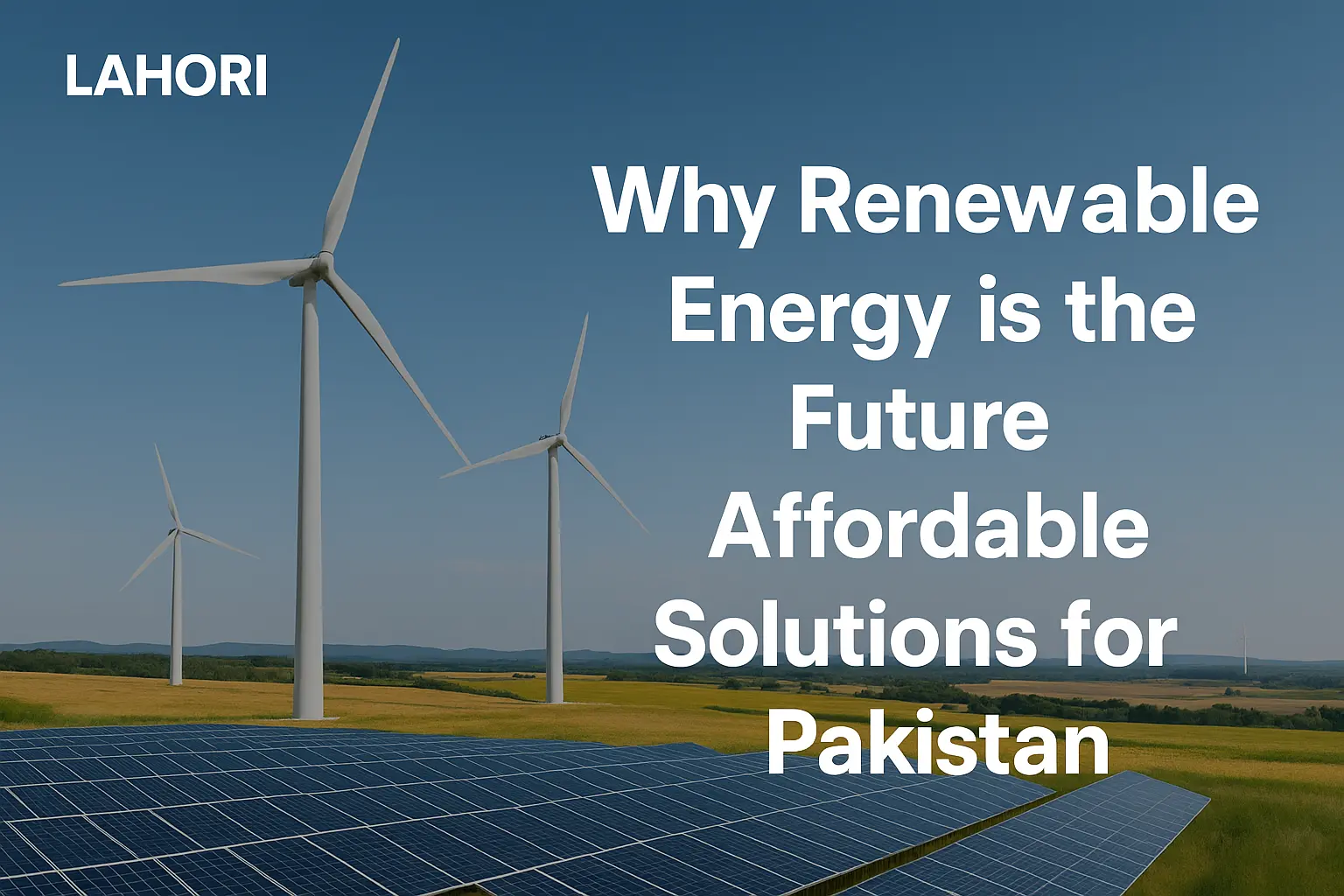
Pakistan’s energy crisis is no secret—frequent load-shedding, soaring electricity bills, and reliance on imported fossil fuels cost households and businesses billions yearly. But there’s hope: renewable energy is no longer a distant dream. With solar panel prices dropping 60% since 2020 and wind energy capacity growing rapidly, Pakistanis are embracing clean power to save money and secure their future. At Lahori Mandi, we break down why renewables are inevitable and how you can join the revolution.
Pakistan’s Energy Crisis: Why Renewables Matter
- Load-Shedding: Urban areas face 6–8 hours/day of outages; rural areas suffer 12+ hours.
- Rising Costs: Electricity tariffs jumped 45% in 2024, hitting middle-class families hardest.
- Environmental Toll: Fossil fuels contribute to smog in Lahore and Karachi, ranking them among the world’s most polluted cities.
The Solution? Renewables like solar, wind, and biogas offer decentralized, affordable, and clean energy.
Renewable Energy Solutions for Pakistani Homes & Businesses
1. Solar Power: The People’s Choice
- Cost: A 5kW solar system costs PKR 700,000–1,000,000 (payback in 4–5 years).
- Savings: Slash bills by 70% and sell excess power via net metering.
- Lahori Mandi’s Pick: JA Solar 550W Panels + Growatt Hybrid Inverter.
2. Wind Energy: Harnessing Coastal & Rural Winds
- Potential: Sindh’s coastline has 50,000 MW wind capacity—enough to power 30 million homes!
- For Farmers: Small wind turbines (PKR 300,000–500,000) can irrigate fields and power homes.
3. Biogas: Turning Waste into Energy
- How It Works: Convert animal manure/kitchen waste into cooking gas and fertilizer.
- Cost: A household biogas plant costs PKR 50,000–80,000 (saves PKR 2,000/month on LPG).
- Ideal For: Rural Punjab and Sindh, where livestock is abundant.
4. Solar Water Heaters & Pumps
- Savings: Cut geyser bills by 90% with a solar water heater (PKR 80,000–120,000).
- Agricultural Impact: Solar pumps (PKR 150,000–250,000) reduce diesel costs for farmers.
Government Policies Driving Change
- Net Metering 2.0: Sell excess solar power to DISCOs at PKR 21.50/unit.
- Tax Exemptions: 15% tax credit on solar panel imports until 2026.
- China-Pakistan Green Corridor: $14 billion invested in wind and solar projects in Balochistan.
Affordability: Renewable vs. Conventional Energy
| Factor | Renewables | Fossil Fuels |
|---|---|---|
| Upfront Cost | Moderate (subsidies available) | Low (but recurring fuel costs) |
| Monthly Savings | 50–80% after payback period | None (bills keep rising) |
| Lifespan | 25–30 years (solar panels) | 10–15 years (generators) |
| Environmental | Zero emissions | High CO₂ & pollution |
Top 5 Renewable Products for Pakistani Households
- 5kW Solar Kit (PKR 900,000) – Powers 3–4 ACs + lights.
- Portable Solar Generator (PKR 150,000) – Ideal for load-shedding.
- Biogas Digester (PKR 65,000) – Converts waste to cooking gas.
- Solar Street Lights (PKR 18,000) – Secure outdoor spaces.
- Solar Water Pump (PKR 200,000) – Irrigate 2–3 acres without diesel.
Shop Now: Renewable Energy Store
Overcoming Myths About Renewables
- Myth 1: “Solar doesn’t work in cloudy weather.”
Fact: Modern panels generate 30–50% output on cloudy days. - Myth 2: “Renewables are too expensive.”
Fact: Solar is cheaper than grid power after 4–5 years.
Why Pakistan Must Act Now
- Climate Vulnerability: Ranked 5th globally for climate risk (Germanwatch 2024).
- Youth Potential: 64% of Pakistanis are under 30—training them in renewables can drive job growth.
- Energy Independence: Cut $12 billion/year spent on fossil fuel imports.
FAQ Section
Q1: Can I run ACs on solar power?
A: Yes! A 5kW system can power 3 ACs + essentials.
Q2: Are wind turbines noisy?
A: Modern turbines are quieter than a refrigerator.
Q3: How do I maintain solar panels?
A: Clean with water every 2–3 months; no expert needed.
Join the Renewable Revolution!
Explore Lahori Mandi’s Renewable Energy Kits and use code GREENPAK25 for 5% off. Let’s build a sustainable Pakistan—one solar panel at a time! ☀